
Short answer: AI agents are task-focused software components that use models and tools to complete defined jobs. Agentic AI is the broader pattern where one or more agents plan, delegate, and coordinate across complex, multi-step enterprise workflows—often as multi-agent systems with orchestration, memory, and governance layers.
Enterprise technology leaders hear both terms daily, often interchangeably. That confusion leads to mismatched architecture, overscoped pilots, and automation that works in demos but fails in production. This guide defines each concept, compares them for B2B decision-making, and explains when AI agents, agentic systems, and autonomous AI patterns actually fit your operations.
What is an AI agent in enterprise software?
An AI agent is a software component that combines a language or reasoning model with tools—APIs, databases, search, workflow engines—to observe context, decide next steps, and take action within defined boundaries.
In business systems, an agent typically:
- Receives a trigger (form submission, CRM event, scheduled job, support ticket)
- Retrieves relevant context from connected systems
- Applies rules, policies, or model reasoning
- Executes one or more actions (update a record, draft a message, open a task)
- Returns structured output for downstream systems or human review
Agents differ from basic chatbots because they are action-oriented. They are designed to complete operational work, not only generate text. For a practical introduction to agent value in operations, see How AI Agents Help Businesses Automate Operations.
Characteristics of production-grade AI agents
| Characteristic | Enterprise expectation |
|---|---|
| Scope | Bounded workflow with clear start and end states |
| Tools | CRM, ERP, ticketing, email, internal APIs, automation platforms |
| Control | Policy rules, permissions, optional human approval |
| Output | Structured, loggable, inspectable results |
| Failure mode | Queue for review, retry, or escalate—not silent errors |
What is agentic AI?
Agentic AI describes systems where AI components exhibit goal-directed behavior: planning sub-tasks, selecting tools dynamically, coordinating with other agents, and adapting when intermediate steps fail or data is incomplete.
Agentic AI is not a single product category. It is an architectural pattern that may include:
- A planner agent that decomposes goals into steps
- Specialist agents for research, validation, execution, or reporting
- An orchestrator that manages state, retries, and handoffs
- Memory layers (short-term session context, long-term knowledge stores)
- Governance controls for permissions, approvals, and audit trails
When people refer to agentic systems or multi-agent systems, they usually mean software where several coordinated agents share responsibility for a complex outcome—such as processing a vendor onboarding request from document intake through compliance checks and ERP setup.
Agentic AI sits on a spectrum. A single agent with tool access is agentic at a small scale. A fleet of cooperating agents across finance, operations, and customer systems is agentic at enterprise scale.
AI agents vs agentic AI: side-by-side comparison
| Dimension | AI agent (single) | Agentic AI (multi-agent / orchestrated) |
|---|---|---|
| Primary goal | Complete one defined workflow | Achieve a complex objective across sub-tasks |
| Complexity | Low to medium | Medium to high |
| Planning | Usually fixed or lightly dynamic | Dynamic decomposition and delegation |
| Integrations | Few systems, clear data paths | Many systems, cross-functional data flows |
| Governance | Simpler approval checkpoints | Layered policies, role separation, audit depth |
| Time to value | Faster for narrow use cases | Longer setup, higher coordination payoff |
| Best for | Triage, classification, drafting, sync jobs | Research + action pipelines, cross-team orchestration |
| Risk profile | Lower when scope is tight | Higher without strong controls and observability |
Featured snippet summary
AI agents automate specific, bounded tasks. Agentic AI coordinates multiple steps—and often multiple agents—to pursue broader business goals with adaptive planning. Choose a single agent when the workflow is stable; choose agentic architecture when the work spans systems, roles, and decision branches.
Architecture: single agent vs multi-agent systems
Understanding architecture helps CTOs and operations directors avoid buying a platform that does not match workflow reality.
Single-agent architecture
Trigger → Context retrieval → Agent (model + tools) → Action / Draft → Human approval (optional) → Systems update → Audit log
This pattern works when:
- Inputs and outputs are well defined
- One team owns the workflow
- Exceptions are limited and documented
- Integration points are stable
Agentic / multi-agent architecture
Goal → Planner agent → ┬→ Research agent → Knowledge / RAG layer
                       ├→ Validation agent → Policy engine
                       ├→ Execution agent → APIs / SaaS / internal systems
                       └→ Reporting agent → Dashboards / notifications
                Orchestrator (state, retries, handoffs, governance)
The orchestrator is critical. Without it, multi-agent demos become fragile chains of prompts. Production AI workflows require state management, idempotent actions, error handling, and explicit human-in-the-loop steps for high-impact operations—as outlined in AI Governance for Business Automation.
How agentic AI connects to your existing stack
Most enterprises should not replace CRM, ERP, or ticketing systems with agents. Agents and agentic layers connect to them through:
- REST or GraphQL API integrations
- Event triggers from webhooks or message queues
- Automation platforms such as n8n for reliable step execution
- Custom middleware when off-the-shelf connectors are insufficient
If disconnected tools are already slowing operations, integration maturity should precede large agentic rollouts. See Why API Integrations Matter for Growing Businesses.
Enterprise use cases and real business examples
Use single AI agents when
1. Lead qualification and routing (B2B sales)
A regional logistics company receives inbound quotes through web forms, email, and partner portals. A single agent enriches company data, scores fit against territory rules, assigns owners in the CRM, and drafts follow-up tasks. Human reps approve outreach for enterprise accounts.
2. Support ticket classification
A software vendor classifies tickets by product area, severity, and account tier. The agent pulls subscription context, suggests macros, and routes escalations. External replies remain human-approved.
3. Operational reporting prep
An agent aggregates weekly metrics from billing, support, and product analytics APIs, normalizes fields, and produces a leadership briefing document. Finance validates numbers before distribution.
These scenarios map cleanly to business processes ready for automation: repeatable steps, measurable outcomes, and identifiable owners.
Use agentic AI when
1. Vendor onboarding across finance and legal
A procurement team must collect documents, verify tax identifiers, run policy checks, create vendor records, and notify stakeholders. A planner agent delegates document extraction, compliance validation, ERP entry, and notification sub-agents. Human approval gates external commitments.
2. Incident response coordination
When a SaaS platform detects elevated error rates, agentic workflows can correlate logs, identify affected tenants, draft status page updates, open internal war-room tasks, and prepare customer communication drafts—each sub-task handled by specialized agents under orchestration.
3. Complex order exception handling
A manufacturer faces frequent exceptions: partial shipments, substitute parts, credit holds, and carrier delays. Agentic systems research order history, inventory, and policy libraries, propose resolution paths, and execute approved updates across OMS, WMS, and CRM systems.
4. Research-to-action workflows for operations teams
Operations directors often need answers that require querying multiple systems, comparing policy documents, and recommending actions. Agentic AI can combine retrieval, reasoning, and structured recommendations—while keeping execution behind approval rules.
Common misconceptions
Misconception 1: "Agentic AI means fully autonomous AI with no humans"
Enterprise autonomous AI rarely means unattended operation for customer-facing or financial actions. Responsible deployments combine automation with approvals, rollback paths, and audit trails. Autonomy applies within guardrails.
Misconception 2: "More agents always means better results"
Additional agents increase coordination overhead, latency, cost, and failure modes. Start with the simplest architecture that meets the workflow. Add agents when sub-task specialization clearly improves quality or safety.
Misconception 3: "AI agents replace the need for custom software"
Agents execute within systems. They do not replace well-modeled data, permissions, integrations, or reporting layers. Many agent initiatives succeed only after a coherent software platform exists—often requiring custom software vs off-the-shelf evaluation.
Misconception 4: "Agentic AI is just advanced prompt engineering"
Production agentic systems require engineering discipline: tool schemas, authentication, rate limits, observability, test environments, versioning, and operational runbooks—similar to MVP to production SaaS platform standards.
Misconception 5: "One vendor platform solves enterprise agent strategy"
Enterprises mix cloud providers, SaaS products, legacy databases, and regional compliance requirements. Architecture should be integration-first and vendor-aware, not locked to a single model endpoint.
Implementation guidance for technology leaders
Step 1: Map the workflow before the architecture label
Document triggers, data sources, decision points, approval requirements, and success metrics. If the process is not stable enough to map, improve process clarity before deploying agents.
Step 2: Choose the minimum agent complexity
| If the workflow… | Start with… |
|---|---|
| Has fixed steps and one owner | Single AI agent |
| Spans 3+ systems with branching logic | Orchestrated agent with specialist sub-calls |
| Requires research + validation + execution | Multi-agent system with separated duties |
| Touches customers or money | Any architecture + mandatory human approval |
Step 3: Design governance into the workflow
Define allowed, restricted, and prohibited actions. Log context, decisions, and outcomes. Align with security and compliance expectations early. Governance is not optional for enterprise AI at scale.
Step 4: Build observability from day one
Track task success rates, latency, tool errors, approval bottlenecks, and model confidence signals. Operations teams should diagnose failures without engineering escalation for every incident.
Step 5: Pilot one high-value workflow
Prove ROI on a workflow with frequent volume and clear metrics—lead response time, ticket routing accuracy, or exception resolution speed. Expand when the first production workflow is stable.
Step 6: Plan integration and data access deliberately
Agents are only as reliable as the systems they touch. Prioritize authoritative data sources, API reliability, and error handling. Custom integration work is often the critical path.
External references for further reading
- NIST AI Risk Management Framework — risk taxonomy and governance practices for AI systems
- Google Cloud: Introduction to agents — conceptual overview of agent components and tool use
- Anthropic: Building effective agents — engineering patterns for reliable agent design
Future trends in agentic enterprise AI
1. Orchestration standards and tool protocols
Enterprises will standardize how agents discover and invoke tools across vendors. Protocols for secure tool access—similar in impact to API standards—will reduce custom glue code.
2. Stronger separation of planning and execution
Organizations will split "advisory" agents from "execution" agents by default, mirroring governance best practices and reducing accidental production changes.
3. Embedded agents inside SaaS and ERP products
Major platforms will ship native agent features. Enterprise architecture teams will focus on cross-platform orchestration rather than agents in isolation.
4. Multi-agent systems with explicit policy engines
Policy-as-code will validate agent plans before execution—especially in regulated industries.
5. Agent observability and cost management
FinOps-style visibility into token usage, tool calls, and workflow throughput will become standard for operations directors managing AI workflows at scale.
6. Hybrid human-agent operating models
Roles will shift toward exception handling, policy design, and quality review—while agents handle volume-driven coordination tasks.
FAQ
What is the difference between AI agents and agentic AI?
An AI agent completes defined tasks using models and tools. Agentic AI coordinates multiple steps—and often multiple agents—to pursue broader goals with dynamic planning and delegation.
When should a business use a single AI agent instead of agentic AI?
Use a single agent for bounded workflows with clear ownership, stable integrations, and measurable outcomes—such as triage, classification, or internal summarization with optional approval.
When does agentic AI make sense for enterprises?
Agentic AI fits cross-functional workflows with branching logic, multiple data sources, and specialized sub-tasks that benefit from separation of research, validation, and execution.
Are AI agents the same as autonomous AI?
Autonomous AI emphasizes independent operation. Enterprise agents usually operate autonomously only within guardrails, with human approval for high-impact actions.
How do multi-agent systems reduce risk in production?
They separate duties across agents, enforce policies between steps, and combine automation with audit trails and human checkpoints.
What should CTOs evaluate before deploying agentic AI?
Evaluate workflow clarity, integrations, governance, observability, fallback behavior, and pilot metrics before scaling multi-agent architectures.
Next steps for your organization
AI agents and agentic AI are complementary—not competing—ideas. AI agents deliver fast value in focused workflows. Agentic systems address complexity when coordination across people, policies, and platforms is the real bottleneck.
Technology leaders should choose architecture based on workflow maturity, integration readiness, and governance requirements—not marketing terminology.
Need a software system like this?
Novapro Lab builds custom software platforms, SaaS systems, and automation infrastructure for teams that want production-ready results—not experiments.
Need a software system like this?
Related articles
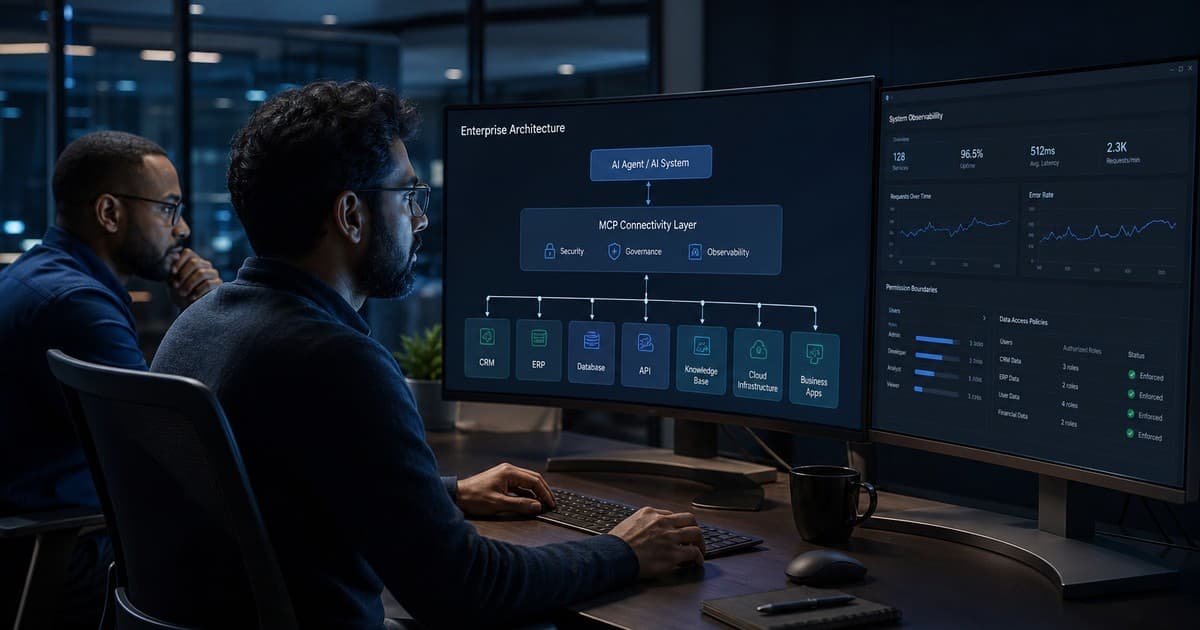
Model Context Protocol (MCP) for Enterprise AI: How to Connect AI Agents to Business Systems Safely
Model Context Protocol (MCP) gives businesses a standardized way to connect AI agents to CRM, ERP, and internal tools—but production use requires governance, least privilege, and clear security controls.

RAG for Enterprise AI: How Retrieval-Augmented Generation Improves Business Accuracy and Trust
Retrieval-augmented generation connects AI models to your company's knowledge—policies, contracts, product docs, and operational data—so enterprise AI answers are grounded, auditable, and useful in production.
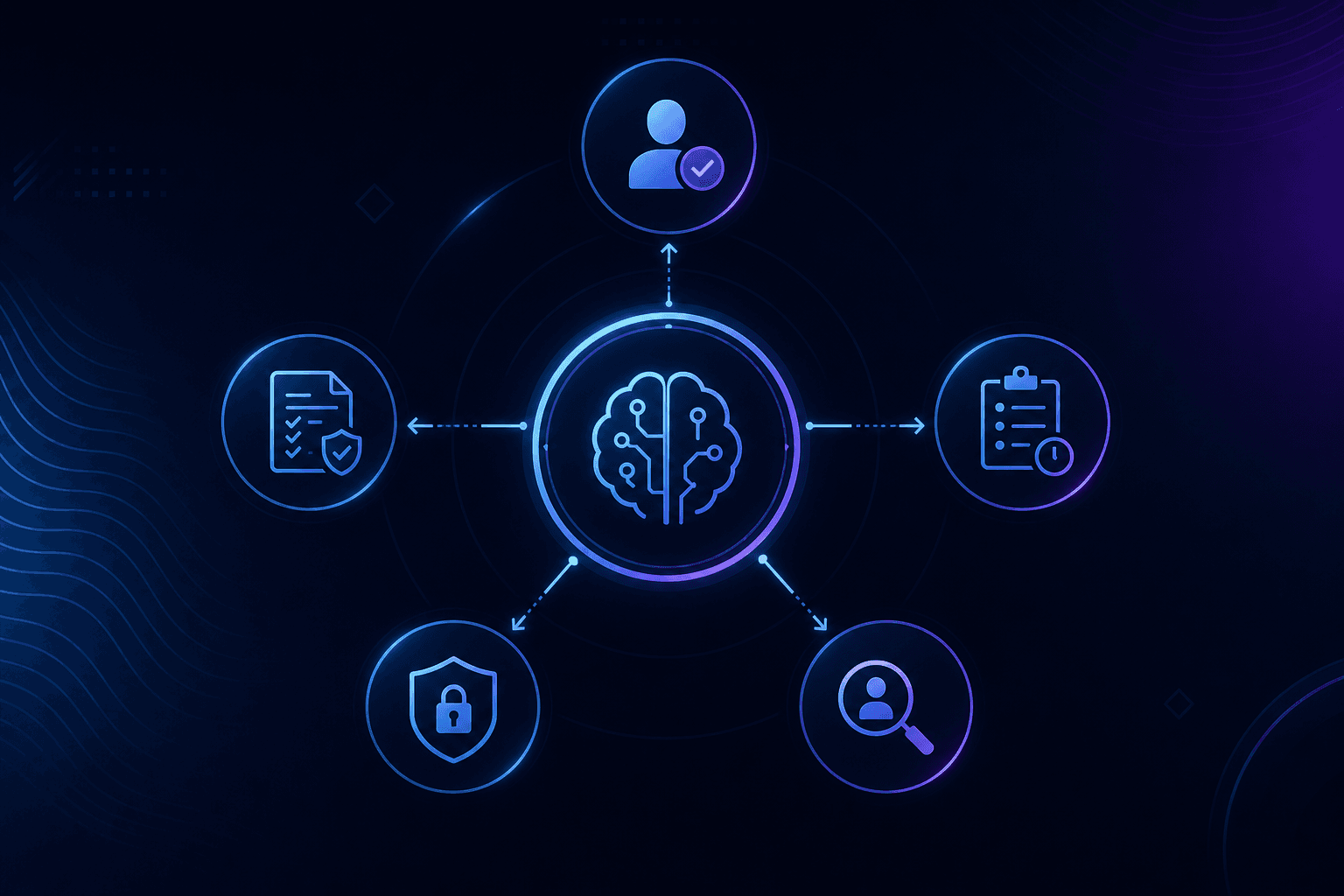
AI Governance for Business Automation: Why Human Approval, Audit Trails, and Clear Rules Matter
AI automation can save time and improve operations, but businesses need approval rules, audit trails, and clear boundaries before allowing AI agents to act.