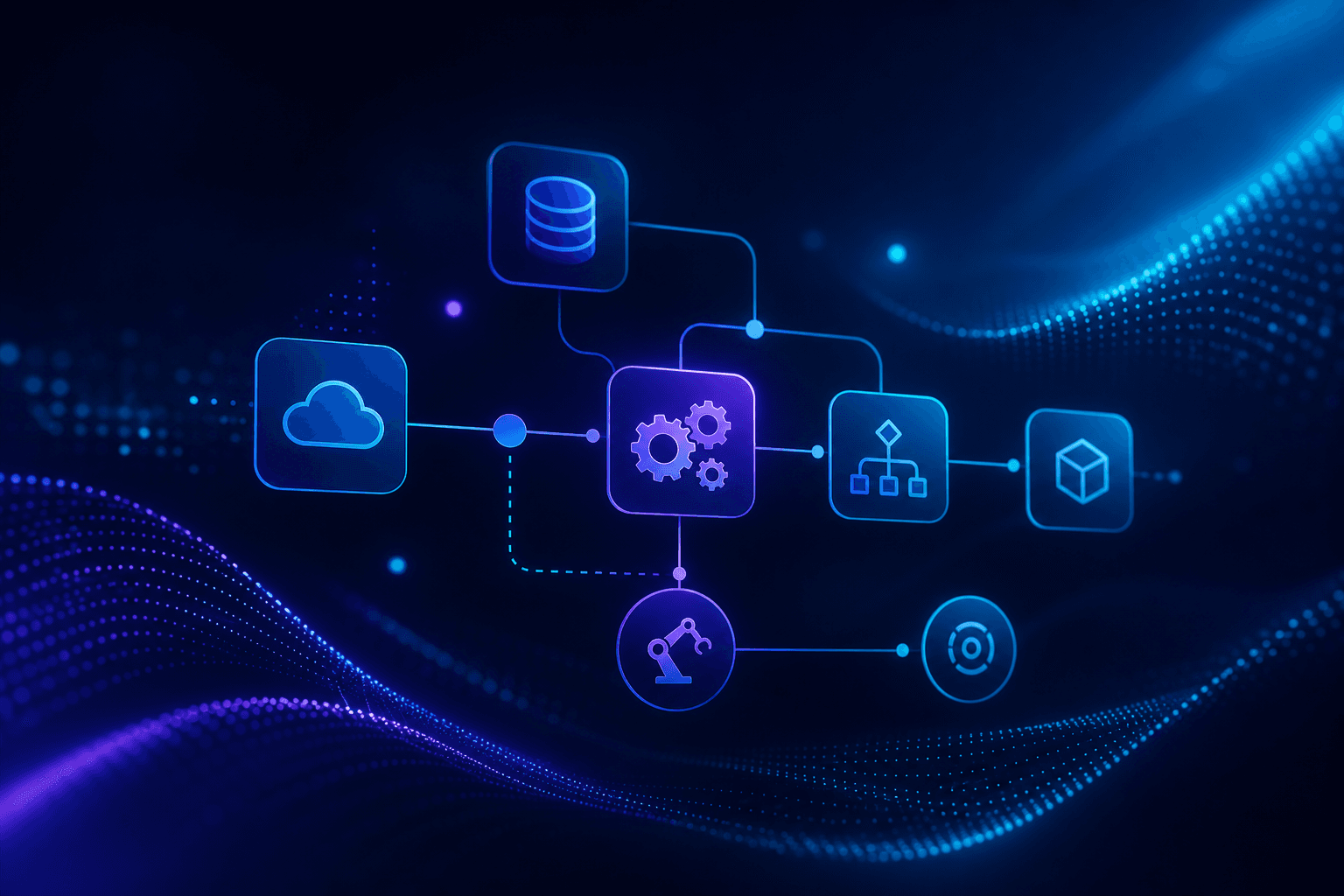
Business teams spend too much time moving information between tools, chasing follow-ups, and repeating the same operational steps every week. AI agents change that pattern by connecting systems, making decisions within defined rules, and executing workflows automatically.
What is an AI agent in a business context?
An AI agent is a software component that can observe data, reason about a task, and take action across your tools. Unlike a simple script, an agent can handle variation: incomplete form submissions, changing lead priorities, or customer requests that need routing to the right team.
In production systems, agents usually work alongside:
- CRM and sales platforms
- Booking and scheduling tools
- Internal dashboards
- Automation platforms such as n8n
- Custom APIs and SaaS backends
Where AI agents create immediate value
1. Lead qualification and follow-up
Agents can review inbound leads, enrich records, assign priority, and trigger follow-up sequences. Sales teams get cleaner pipelines and faster response times without manual triage.
2. Operations coordination
From dispatching tasks to updating order status, agents reduce the number of handoffs between departments. They keep systems synchronized and surface exceptions when human review is required.
3. Customer support workflows
Agents can classify requests, pull account context, draft responses, and escalate complex cases. This improves consistency while keeping people focused on high-value interactions.
4. Internal knowledge work
Teams often need answers from documentation, tickets, and project history. Agents can retrieve relevant context and prepare structured outputs for decision-makers.
Design principles for reliable automation
Successful agent systems are not open-ended chatbots bolted onto a business. They are engineered workflows with clear boundaries:
- Defined inputs and outputs — every agent step should produce structured, inspectable results.
- Human-in-the-loop checkpoints — high-risk actions should require approval.
- Observability — logs, metrics, and audit trails are essential for production use.
- Integration-first architecture — agents should connect to existing SaaS and API layers instead of replacing them prematurely.
How Novapro Lab builds agent systems
We design agent workflows as part of broader software platforms: SaaS products, internal operations tools, and automation layers connected to real business data. That means agents are deployed with the same engineering standards as production APIs, dashboards, and cloud infrastructure.
Typical delivery includes:
- Workflow mapping and automation opportunities
- Agent orchestration and tool integration
- API and data layer design
- Monitoring, fallback paths, and operational controls
When to start with agents
If your team is repeatedly copying data between systems, delaying follow-ups because of manual queues, or struggling to scale operations without hiring linearly, agent automation is worth evaluating.
The strongest starting points are repetitive, rules-driven processes with measurable outcomes: lead response time, booking accuracy, ticket routing, or reporting cycles.
Next steps
Start with one high-impact workflow, define success metrics, and build an agent system that integrates with your existing stack. Expand incrementally once the first workflow proves value in production.
Need help designing an agent workflow for your business? Novapro Lab builds custom software platforms, SaaS systems, and automation infrastructure for teams that want production-ready results—not experiments.
Need a software system like this?
Related articles
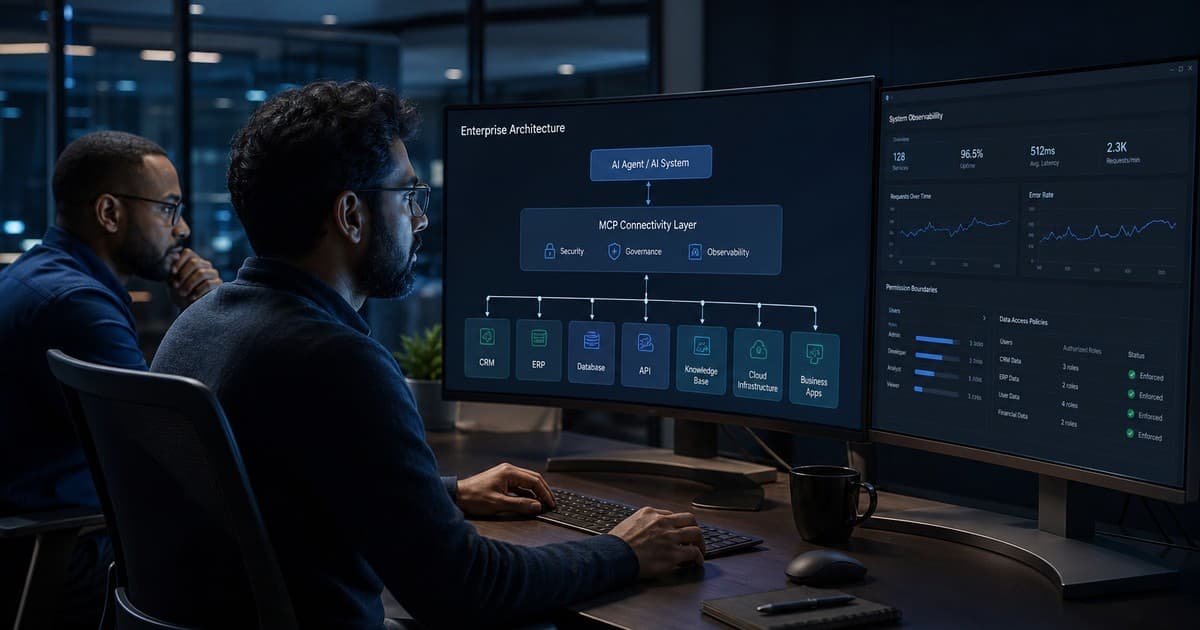
Model Context Protocol (MCP) for Enterprise AI: How to Connect AI Agents to Business Systems Safely
Model Context Protocol (MCP) gives businesses a standardized way to connect AI agents to CRM, ERP, and internal tools—but production use requires governance, least privilege, and clear security controls.

AI Agents vs Agentic AI: What's the Difference and When Should Businesses Use Each?
AI agents and agentic AI are related but not the same. Learn how each model works, when enterprises should use them, and how to implement autonomous workflows without losing control.

RAG for Enterprise AI: How Retrieval-Augmented Generation Improves Business Accuracy and Trust
Retrieval-augmented generation connects AI models to your company's knowledge—policies, contracts, product docs, and operational data—so enterprise AI answers are grounded, auditable, and useful in production.