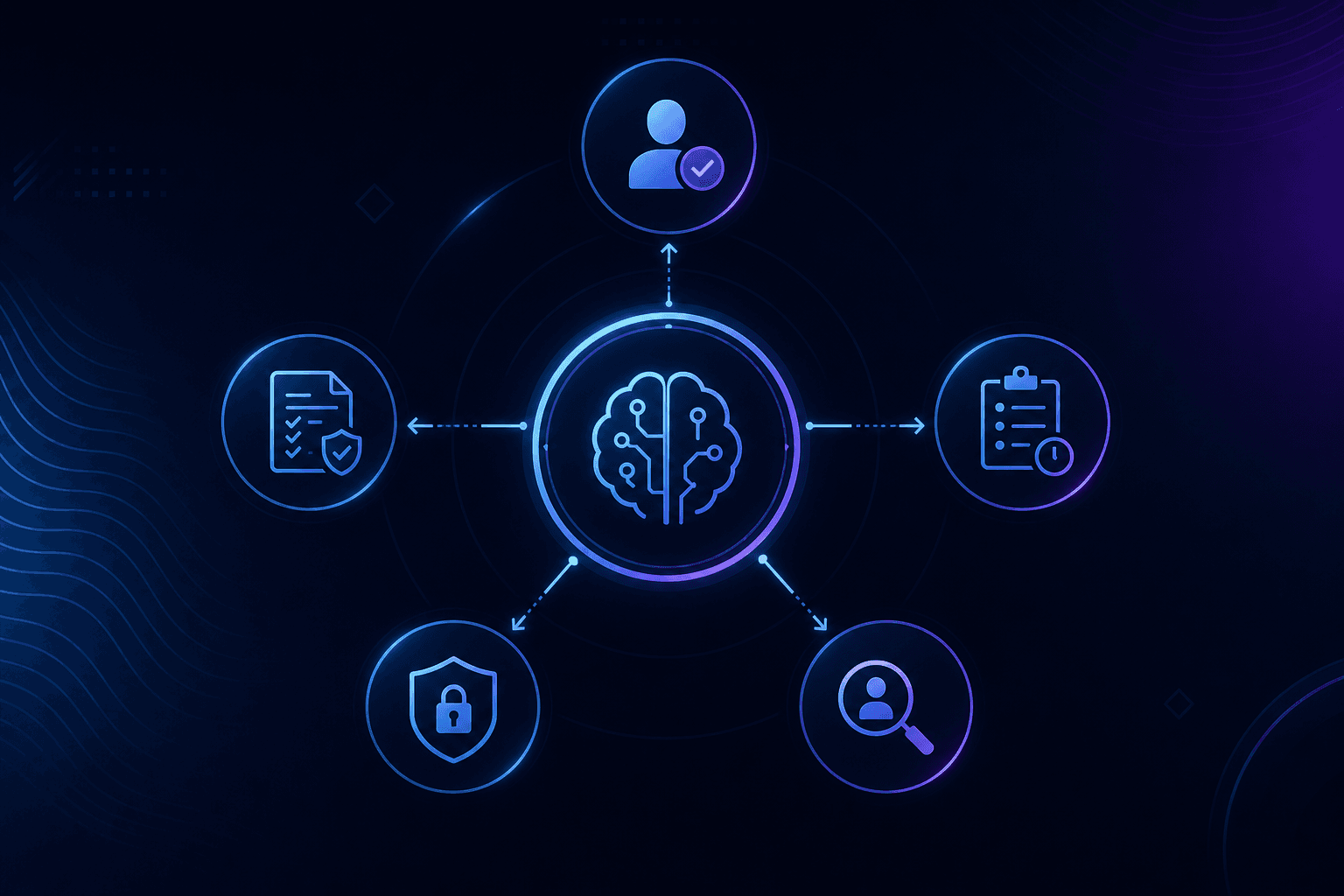
Business teams are adopting AI agents to automate repetitive work, connect systems, and respond faster to operational events. That progress is real—but so is the risk when software can act without clear limits. AI governance for business automation is the set of rules, approvals, and records that keep automation useful, accountable, and safe in production.
Introduction
What is AI governance in a business context? It means defining who can trigger an automated action, what an AI agent is allowed to do, when a human must review a decision, and how every step is logged for later review. Without that structure, automation can move quickly in the wrong direction: sending incorrect customer updates, changing records without authorization, or executing workflows that no one can explain afterward.
Governance is not a blocker to innovation. It is how teams scale automation with confidence.
Why does AI automation need governance?
Most business processes involve data, permissions, and consequences. A workflow that drafts an internal summary is different from one that updates a billing record or sends a message to a customer. Governance helps teams answer practical questions before anything runs in production:
- Which actions can run automatically?
- Which actions require human approval?
- What data can the agent read or write?
- How do we detect and reverse a mistake?
- Who is responsible when something goes wrong?
AI automation governance also supports compliance, vendor reviews, and internal security policies. Even when regulations do not explicitly mention AI agents, businesses still need traceability, access control, and change management—the same foundations used for any production software.
What is the difference between advice and action?
A common mistake is treating every AI output the same way. In practice, business automation should separate:
- Advice — summaries, recommendations, draft responses, or ranked options that a person reviews before use.
- Action — updates to systems, messages sent to customers, financial changes, or any step that affects live business records.
An agent that suggests a follow-up email is lower risk than an agent that sends that email automatically. Governance should reflect that difference with explicit rules, permissions, and approval paths.
When should AI pause for human approval?
Human approval is one of the most effective controls in secure AI automation. A well-designed workflow pauses before high-impact steps such as:
- Sending external communications on behalf of the company
- Creating, updating, or deleting customer or financial records
- Escalating issues beyond predefined thresholds
- Executing actions flagged as uncertain or low confidence
- Running workflows outside normal business hours or approved scopes
The goal is not to review every minor task. The goal is to place checkpoints where mistakes would be costly, visible, or hard to undo.
Why should every AI action be traceable?
Audit trails for AI agents answer a simple but critical question: what happened, when, and why? A useful audit trail typically includes:
- The trigger that started the workflow
- Inputs and context used by the agent
- Rules or policies applied at each step
- Actions attempted, approved, or blocked
- The user or system identity responsible for approval
- Timestamps and outcome status
Traceability supports troubleshooting, customer support, security reviews, and continuous improvement. It also helps teams trust automation because results can be inspected—not guessed.
What can AI do—and what should it not do?
Clear rules reduce ambiguity for both humans and software. Strong governance documents usually define:
- Allowed actions — read-only lookups, internal notifications, draft generation, scheduled reports
- Restricted actions — payments, contract changes, bulk exports, privileged account updates
- Prohibited actions — bypassing authentication, accessing unrelated datasets, executing unapproved third-party tools
- Fallback behavior — stop, queue for review, or route to a human owner when confidence is low
These boundaries should be enforced in workflow design—not left as informal team habits.
Practical examples for business operations
Lead routing and sales follow-up
An agent can classify inbound leads and prepare a recommended owner or next step. Before a message is sent or a CRM record is changed, governance may require approval for high-value accounts or non-standard routing.
Customer support triage
Agents can summarize tickets, suggest categories, and retrieve account context. External replies or refund-related actions should pass through defined approval and logging rules.
Operations and reporting
Automation can compile weekly metrics, detect anomalies, and open internal tasks. If an agent proposes operational changes—such as reassigning work or updating inventory thresholds—those actions should be traceable and permission-controlled.
Internal knowledge workflows
Agents can help teams find documentation or prepare briefing notes. Governance ensures they only access approved sources and do not expose sensitive material outside authorized scopes.
What should businesses look for in AI automation software?
When evaluating platforms or custom systems, look for capabilities that support responsible deployment:
- Role-based permissions and environment separation
- Configurable approval steps before high-impact actions
- Structured logs and searchable audit history
- Clear workflow boundaries and test modes
- Integration with existing SaaS, APIs, and identity systems
- Ability to disable or roll back specific automations quickly
- Documentation of data sources and decision rules
Tools that move fast but hide their actions behind a black box create long-term operational risk.
How Novapro Lab approaches responsible automation
Novapro Lab designs business automation as production software—not experimental scripts. That means agent workflows are built alongside APIs, data layers, and operational controls teams already rely on. Typical principles include:
- Mapping workflows before automating them
- Separating advisory steps from executable actions
- Adding human approval where business impact is material
- Logging context, decisions, and outcomes for review
- Connecting automation to existing SaaS and internal systems rather than replacing them without a plan
We help businesses implement responsible AI automation that fits their operations, security expectations, and growth plans—without overpromising outcomes AI cannot guarantee.
Final thoughts
AI agents can improve speed, consistency, and visibility across business operations. They do not remove the need for judgment, accountability, or clear rules. Teams that invest in AI risk management for companies early—through approvals, audit trails, and explicit permissions—are better positioned to scale automation safely.
If you are planning workflow automation and want a structured approach to governance, start with one high-impact process, define what “safe to automate” means for your team, and build controls into the workflow from day one.
Ready to discuss responsible automation for your business? Schedule a consultation with Novapro Lab to review your workflows, approval needs, and production requirements.
Need a software system like this?
Related articles
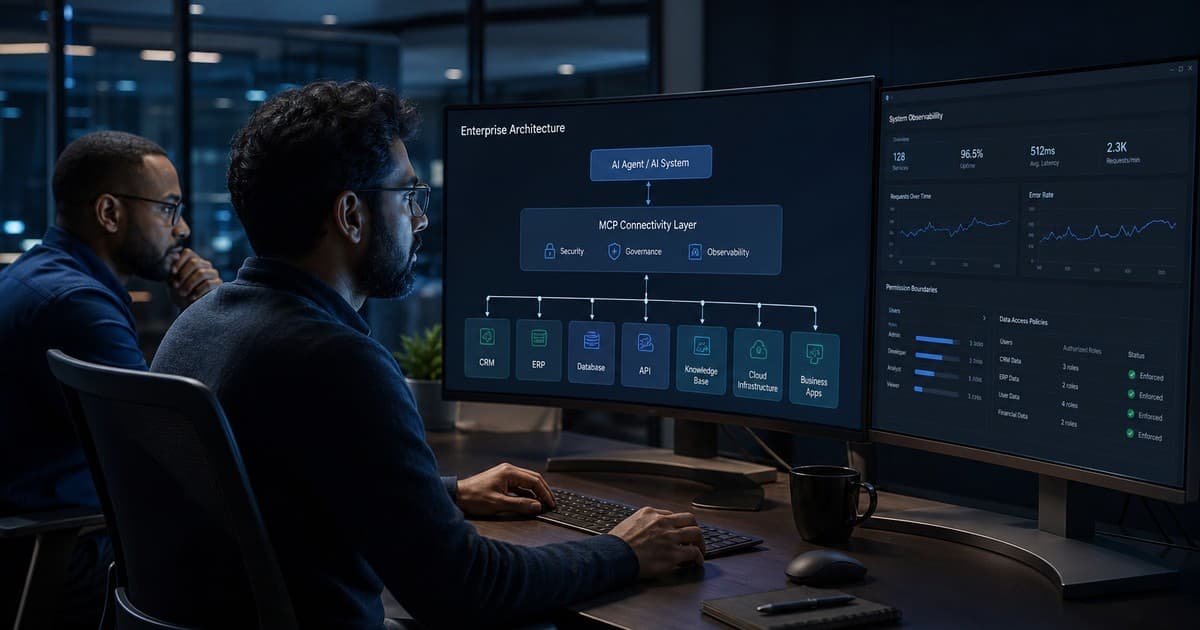
Model Context Protocol (MCP) for Enterprise AI: How to Connect AI Agents to Business Systems Safely
Model Context Protocol (MCP) gives businesses a standardized way to connect AI agents to CRM, ERP, and internal tools—but production use requires governance, least privilege, and clear security controls.

AI Agents vs Agentic AI: What's the Difference and When Should Businesses Use Each?
AI agents and agentic AI are related but not the same. Learn how each model works, when enterprises should use them, and how to implement autonomous workflows without losing control.

RAG for Enterprise AI: How Retrieval-Augmented Generation Improves Business Accuracy and Trust
Retrieval-augmented generation connects AI models to your company's knowledge—policies, contracts, product docs, and operational data—so enterprise AI answers are grounded, auditable, and useful in production.