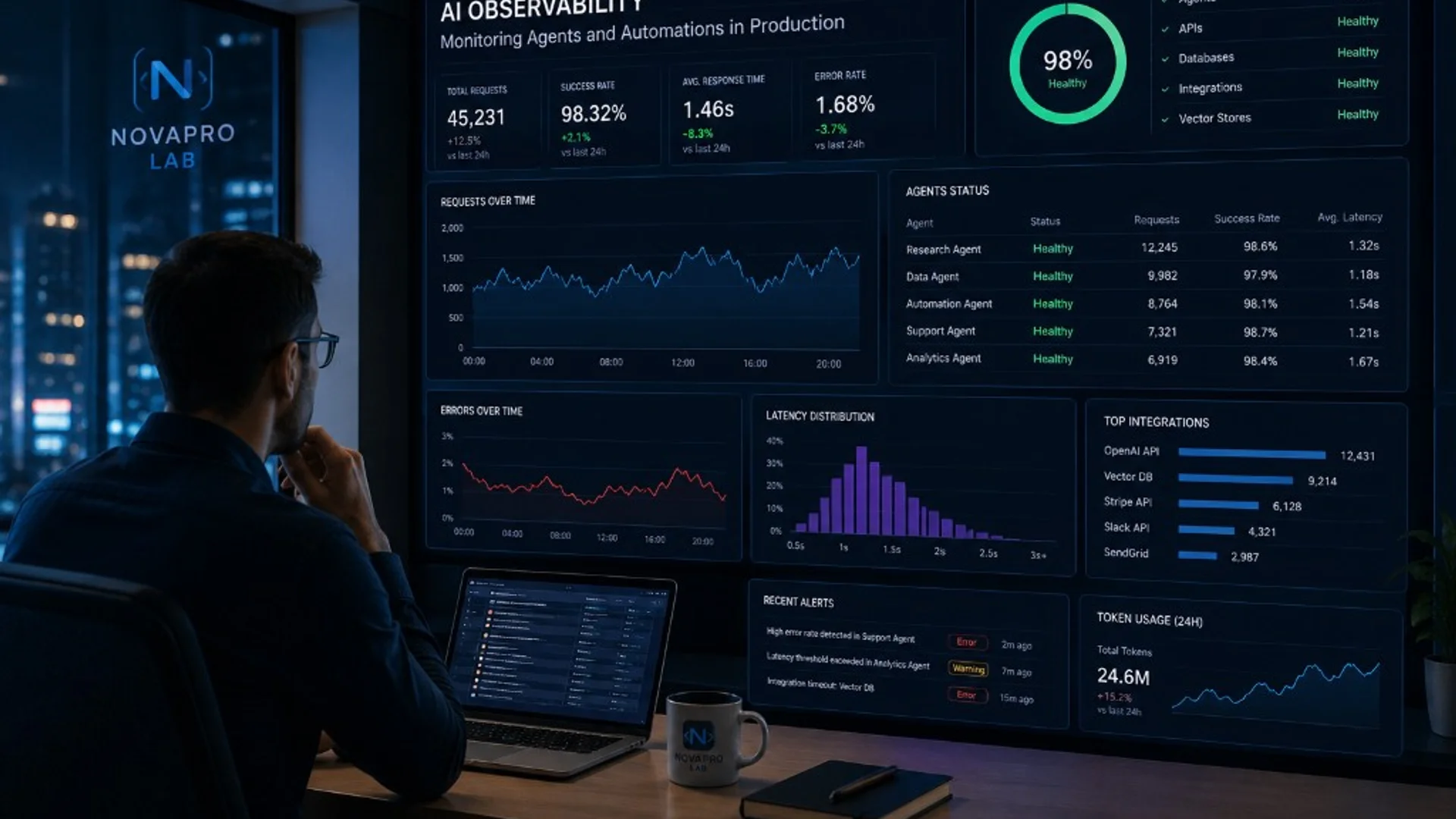
AI observability کیا ہے؟ AI observability وہ practices اور tooling کا مجموعہ ہے جو teams کو production میں AI agents، LLM calls، retrieval steps، tools، اور automated workflows کا behavior دکھاتی ہے — بشمول cost، latency، failures، decision traces، اور human approval outcomes۔
Companies AI experiments سے کاروباری operations میں AI agents کی طرف بڑھ رہی ہیں۔ یہ shift نئی operational layer بناتا ہے: models جو reason کرتے ہیں، APIs call کرتے ہیں، steps میں branch کرتے ہیں، اور کبھی live data پر act کرتے ہیں۔ AI observability (جسے LLM observability یا AI agent monitoring بھی کہا جاتا ہے) وہ طریقہ ہے جس سے آپ اس layer کو understandable، affordable، اور accountable رکھتے ہیں بغیر یہ دعویٰ کیے کہ risk غائب ہو گیا۔
تعارف
Operations leaders، founders، اور technology managers launch کے بعد اکثر وہی gap دیکھتے ہیں: demos fluent تھیں، لیکن production behavior explain کرنا مشکل ہے۔ Support agent غلط tool retry کرتا ہے۔ Token spend پرسکون weekend پر spike کرتا ہے۔ Workflow complete ہو جاتا ہے لیکن کوئی reconstruct نہیں کر سکتا کہ customer record کیوں بدلا۔
Observability AI governance یا human judgment کی جگہ نہیں لیتی۔ یہ وہ signals فراہم کرتی ہے جن پر governance انحصار کرتی ہے — کس نے کیا approve کیا، کون سا model چلا، کیا fail ہوا، اور اس کی cost کیا تھی — تاکہ teams assumptions کی بجائے evidence سے respond کریں۔
AI observability کا مطلب
Conventional software میں observability عام طور پر services اور databases کے لیے metrics، logs، اور distributed traces ہوتی ہے۔ AI system monitoring اس idea کو non-deterministic components تک بڑھاتی ہے:
- Model اور agent activity — کون سا agent یا workflow چلا، کس input اور outcome کے ساتھ
- Prompt اور response traces — prompts، retrieved context، اور model outputs کے structured records (sensitive fields کے لیے redaction کے ساتھ)
- Tool calls — کون سی APIs یا functions invoke ہوئیں، parameters، status codes، اور latency کے ساتھ
- Workflow execution — step order، branch decisions، queue times، اور idempotency keys
AI system میں business کو کیا monitor کرنا چاہیے؟ کم از کم: activity volume، success اور error rates، cost per workflow، latency percentiles، approval queue depth، audit completeness، اور integration health۔ ان signals کو business KPIs سے جوڑیں — tickets resolved، leads qualified، reports generated — صرف infrastructure charts نہیں۔
Traditional software monitoring کیوں کافی نہیں
Application performance monitoring (APM) hosts، containers، اور APIs کے لیے اب بھی اہم ہے۔ لیکن AI workflows وہ failure modes شامل کرتے ہیں جنہیں APM interpret کرنے کے لیے design نہیں کیا گیا:
- Hallucination risk — fluent text جو غلط ہے یا retrieved context سے unsupported
- Tool misuse — valid HTTP 200 responses جو غلط record update کریں
- Prompt drift — خاموش behavior change جب prompts، models، یا retrieval indexes بدلیں
- Cost spikes — long context windows، retry loops، یا runaway agent planning
Traditional dashboards green infrastructure دکھا سکتے ہیں جب business outcomes degrade ہوں۔ AI workflow monitoring technical traces کو workflow identifiers، customer IDs (جہاں policy allow کرے)، اور approval states سے جوڑتی ہے تاکہ operators business impact دیکھیں — صرف CPU usage نہیں۔
Businesses کو کیا monitor کرنا چاہیے
AI monitoring for business teams کے لیے یہ monitoring checklist starting point کے طور پر استعمال کریں:
| Area | Examples |
|---|---|
| Activity | Runs per hour، active agents، concurrent workflows |
| Quality signals | Human overrides، low-confidence flags، retrieval misses |
| Cost | Tokens per run، model tier usage، embedding اور vector costs |
| Latency | End-to-end workflow time، model time، tool time |
| Reliability | Failed runs، retry counts، fallback model usage |
| Governance | Approval wait time، rejected actions، policy blocks |
| Security | Access denials، sensitive field redaction events |
Operational ownership assign کریں: engineering traces instrument کرتی ہے؛ operations thresholds define کرتی ہے؛ security audit اور access controls validate کرتی ہے۔
Decision traces اور agent behavior
Decision traces (کبھی run traces یا spans کہلاتے ہیں) document کرتے ہیں کہ agent trigger سے outcome تک کیسے گیا۔ Useful trace میں شامل ہو:
- Services across shared correlation ID
- Input snapshot یا hash (ہمیشہ raw PII نہیں)
- Retrieval queries اور source document IDs
- Model version اور parameters
- Tool call sequence outcomes کے ساتھ
- Policy evaluations اور human approval records
Traces debugging، customer support، اور post-incident review support کرتے ہیں۔ یہ teams کو prompt یا model changes سے پہلے اور بعد agent behavior compare کرنے میں بھی مدد دیتے ہیں — agentic vs single-agent designs evaluate کرتے وقت critical۔
Example: support triage agent
Triage agent tickets classify کر سکتا ہے، account context fetch کر سکتا ہے، اور reply draft کر سکتا ہے۔ Observability classification confidence، کون سے knowledge articles retrieve ہوئے، اور send سے پہلے human نے approve کیا یا نہیں — دکھانی چاہیے — صرف یہ نہیں کہ workflow «succeeded»۔
Cost اور token monitoring
AI cost monitoring models کے لیے FinOps ہے۔ Track کریں:
- Token consumption workflow، tenant، team، یا customer segment کے حساب سے
- Model routing — جب cheaper models drafts handle کریں اور premium models complex steps
- Infrastructure costs — vector databases، embedding jobs، GPU endpoints، third-party API fees
Weekly spend، cost per successful outcome، اور anomalies (مثال کے طور پر 3× baseline tokens per run) پر budgets اور alerts set کریں۔ Cost visibility leaders کو decide کرنے میں مدد دیتی ہے کہ prompts optimize کریں، retrieval cache کریں، یا tool scopes narrow کریں — useful automation block کیے بغیر۔
Latency اور reliability
Response latency user experience اور operational throughput affect کرتی ہے۔ Monitor کریں:
- Full workflows اور model-only segments کے لیے percentiles (p50، p95، p99)
- Human approval سے پہلے queue time
- Serverless یا autoscaling inference پر cold-start effects
Reliability metrics میں workflow version کے حساب سے success rate، error taxonomy (model timeout، tool 4xx/5xx، policy block)، اور saturation signals (rate limits، concurrency caps) شامل ہوں۔
Dashboards non-engineers کے لیے readable ہوں: operations directors کو دکھنا چاہیے کہ internal یا customer-facing automations کے SLAs meet ہو رہے ہیں یا نہیں۔
Failures، retries، اور fallback behavior
Production AI agents predictable طریقوں سے fail ہوتے ہیں: model timeouts، malformed tool arguments، rate limits، یا upstream SaaS outages۔ Define کریں:
- Retry policy — کون سے errors retry ہوں، backoff اور max attempts کے ساتھ
- Fallback models — primary inference fail ہونے پر smaller یا alternate providers
- Degraded modes — silent failure کی بجائے human review کے لیے queue
ہر retry اور fallback reason codes کے ساتھ log کریں۔ اس کے بغیر teams «successful» run misread کر سکتی ہیں جو weaker model استعمال کر گیا یا validation step skip کر گیا۔
Observability recovery بہتر بناتی ہے؛ یہ accuracy guarantee نہیں کرتی اور hallucination risk نہیں ہٹاتی۔ High-stakes outputs کے لیے human review اور source grounding ضروری رہتے ہیں۔
Human approval checkpoints
Human-in-the-loop AI control بھی ہے اور observability signal بھی۔ Monitor کریں:
- Approval queues میں waiting time
- Workflow کے حساب سے approval vs rejection rates
- High-impact actions کس نے approve کیے (identity اور timestamp)
Approvals کو governance rules سے جوڑیں: external messages، financial updates، bulk exports، اور low-confidence classifications pause یا release ہونے پر explicit events emit کریں۔
Privacy، security، اور auditability
AI audit trails detail اور sensitive-data handling کے درمیان balance کرنی چاہئیں:
- Stored prompts اور responses میں PII redact یا tokenize کریں جہاں full text ضروری نہ ہو
- Trace viewers پر access controls enforce کریں (role-based، environment-separated)
- Policy کے مطابق logs retain کریں — default طور پر indefinitely نہیں
Security monitoring میں agent endpoints پر failed authentication، unusual tool call patterns، اور unauthorized datasets access کی کوششیں شامل ہوں۔ Observability compliance reviews support کرتی ہے؛ یہ perfect compliance خود سے ensure نہیں کرتی۔
Practical implementation framework
Enterprise AI operations کے لیے unnecessary complexity کے بغیر یہ phased framework استعمال کریں:
Phase 1 — Instrument one workflow
- Trigger پر run correlation ID assign کریں
- Start، end، status، model ID، اور cost estimate log کریں
- Tool calls latency اور HTTP status کے ساتھ capture کریں
Phase 2 — Add business context
- Runs کو workflow name، environment، اور owning team سے tag کریں
- Business KPIs (cases closed، orders validated) سے link کریں
- Error rate اور cost anomalies کے لیے on-call alerts define کریں
Phase 3 — Governance integration
- Approval decisions اور policy blocks same trace میں record کریں
- Operations اور leadership review کے لیے dashboards بنائیں
- Common failure classes کے لیے runbooks document کریں
Phase 4 — Continuous improvement
- Releases across traces compare کریں
- Product اور operations stakeholders کے ساتھ weekly review
- Integration maturity اور production platform practices کے ساتھ align کریں
Common mistakes
صرف success/failure bits log کرنا — Tool اور retrieval detail کے بغیر root cause analysis مشکل ہو جاتا ہے۔
Finance کے پوچھنے تک cost ignore کرنا — Token spend variable ہے؛ day one سے track کریں۔
Retention policy کے بغیر full prompts store کرنا — Privacy debt اور noisy archives بناتا ہے۔
Dashboards کا کوئی owner نہیں — Unused metrics operations improve نہیں کرتے۔
Observability کو governance substitute سمجھنا — Visibility مدد دیتی ہے؛ rules اور approvals اب بھی define کرتے ہیں کہ automatically کیا run ہو سکتا ہے۔
Test environments skip کرنا — Behavior models اور data across مختلف ہوتا ہے؛ changes promote کرنے سے پہلے traces compare کریں۔
Final business recommendations
AI observability کو production architecture کا حصہ سمجھیں، post-launch accessory نہیں۔ Narrow start کریں، per run cost اور latency measure کریں، human approvals traces میں wire کریں، اور failures کو کisi بھی customer-facing service جیسی discipline سے review کریں۔
Cross-system work automate کرنے والی teams کے لیے observability clear process design کے ساتھ naturally pair ہوتی ہے — دیکھیں business processes ready for automation — اور APIs اور data sources across integration health کے ساتھ۔
Novapro Lab businesses کو production software، AI agents، automation، اور integrations operational controls کے ساتھ design اور build کرنے میں مدد کرتا ہے — logging، approvals، اور deployment patterns real environments کے لیے، بغیر overpromise کیے کہ AI کیا guarantee کر سکتا ہے۔
اپنے workflows کے لیے observability discuss کرنا چاہتے ہیں؟ Novapro Lab کے ساتھ agents، costs، اور production requirements review کرنے کے لیے consultation schedule کریں۔
FAQ
AI observability کیا ہے؟
AI observability وہ practice ہے جس میں AI agents، LLM calls، tools، اور workflows سے traces، metrics، اور logs جمع کیے جاتے ہیں تاکہ teams production میں behavior، cost، latency، failures، اور human approval outcomes سمجھ سکیں۔
AI system میں business کو کیا monitor کرنا چاہیے؟
Agent activity، prompts اور responses (redaction کے ساتھ)، tool calls، workflow steps، token اور infrastructure cost، latency، failed runs، retries، fallback models، approval checkpoints، audit trails، access controls، alerts، اور business outcomes سے جُڑے KPIs monitor کریں۔
AI observability traditional monitoring سے کیسے مختلف ہے؟
Traditional monitoring services اور infrastructure health پر focus کرتی ہے۔ AI observability model outputs، retrieval، tool chains، non-deterministic failures، اور governance events شامل کرتی ہے — اور انہیں business workflows سے link کرتی ہے۔
کیا AI observability hallucination risk ختم کرتی ہے؟
نہیں۔ یہ teams کو patterns detect، incidents investigate، اور prompts اور retrieval improve کرنے میں مدد دیتی ہے۔ High-stakes decisions کے لیے validation، grounding، اور human review essential رہتے ہیں۔
Decision trace کیا ہے؟
Decision trace structured record ہے کہ automated AI workflow trigger سے retrieval، model calls، tool use، policy checks، اور approvals کے ذریعے final outcome تک کیسے advance ہوا۔
AI observability day to day کون operate کرے؟
Engineering عام طور پر instrumentation own کرتی ہے؛ operations یا product KPIs اور thresholds own کرتے ہیں؛ security یا compliance audit retention اور access policies own کرتے ہیں — shared review cadences کے ساتھ۔